

Are you planning to work and live in Italy in 2026 or 2027? Italy is one of the most popular European destinations for foreign workers because of its strong job demand in agriculture, tourism, hospitality, construction, transport, logistics, care work, manufacturing, and many other sectors.
Italy is not only famous for its beautiful cities, rich history, world-famous food, and peaceful lifestyle. It is also becoming an important destination for non-EU foreign workers who want legal work opportunities in Europe.
The good news is that Italy has already planned foreign worker quotas for 2026, 2027, and 2028 under the Decreto Flussi system. This means applicants who miss one cycle can prepare early for the next opportunity instead of waiting without a plan.
For 2027, Italy has planned a quota of 165,850 foreign workers. This creates a strong opportunity for applicants from Bangladesh and other non-EU countries who want to work legally in Italy through seasonal work, non-seasonal work, self-employment, or other eligible work categories.
In this complete guide, you will learn everything about the Italy Work Permit Visa 2026-2027, including Decreto Flussi quota, 2027 opportunity, Nulla Osta, required documents, employer sponsorship, application steps, visa costs, processing time, best job sectors, common mistakes, and important tips for Bangladesh applicants.
Quick Summary: Italy Work Permit Visa 2026-2027
| Country | Italy |
| Visa Type | Work Visa / National Visa / Seasonal Work Visa |
| Main System | Decreto Flussi |
| Who Can Apply? | Non-EU citizens with a genuine job offer |
| Job Offer Required? | Yes, for most work visa categories |
| Employer Role | Employer applies for Nulla Osta in Italy |
| Applicant Role | Applicant applies for visa after Nulla Osta approval |
| 2027 Planned Quota | 165,850 foreign workers |
| Best Sectors | Agriculture, tourism, hospitality, construction, transport, logistics, care work, manufacturing |
What is an Italy Work Permit?
An Italy work permit is an official authorization that allows a non-EU citizen to work legally in Italy. In most cases, a foreign worker cannot apply for an Italy work permit alone. The process usually starts with an Italian employer who wants to hire a foreign worker.
The employer first applies for work authorization in Italy. This authorization is called Nulla Osta. After the Nulla Osta is approved, the worker can apply for an Italy work visa from the Italian Embassy, Consulate, or authorized visa application center in their country.
Many applicants confuse three important documents. These are not the same:
- Nulla Osta: Work authorization issued in Italy for the employer and worker.
- Work Visa: Entry visa issued by the Italian Embassy or Consulate so the worker can travel to Italy.
- Permesso di Soggiorno: Residence permit that the worker must apply for after entering Italy.
To work legally in Italy, you must complete all steps properly. Getting a visa sticker in your passport is not the final step. After arriving in Italy, you must apply for the residence permit within the required time.
Also interested: Romania Work Visa Online Apply
What is Decreto Flussi?
Decreto Flussi is the official quota system used by the Italian government to allow non-EU foreign workers to enter Italy legally for work. Every year, Italy decides how many foreign workers can enter the country and which job categories are eligible.
The Decreto Flussi system is very important for workers from Bangladesh and other non-EU countries because most general work visa applications are connected with this quota system.
The quota may include different categories such as:
- Seasonal work
- Non-seasonal subordinate work
- Self-employment
- Family assistance and care work
- Special employment categories
Most low-skilled and medium-skilled foreign workers apply through Decreto Flussi. Highly skilled workers may sometimes apply through other routes, such as the EU Blue Card.
Italy Work Permit 2027 Quota: New Opportunity for Foreign Workers
The most important update for applicants is that Italy has planned work permit quotas for 2026, 2027, and 2028. This is good news because applicants can prepare early for the upcoming Italy work permit opportunities.
For 2027, Italy has planned a quota of 165,850 foreign workers. This means thousands of non-EU workers may get the chance to enter Italy legally for work if they meet the correct requirements.
Here is the planned Decreto Flussi quota for 2026 to 2028:
| Year | Planned Work Quota |
| 2026 | 164,850 workers |
| 2027 | 165,850 workers |
| 2028 | 166,850 workers |
This means applicants should not wait until the last moment. If you are serious about working in Italy, you should start preparing your documents, finding a genuine employer, checking your passport validity, collecting work experience documents, and understanding the Nulla Osta process as early as possible.
However, quota availability does not mean automatic visa approval. You still need a real job offer, employer sponsorship, Nulla Osta approval, correct documents, and final visa approval from the Italian Embassy or Consulate.
Why Should You Prepare for Italy Work Permit 2027 Early?
Italy work permit applications are highly competitive. Thousands of employers and applicants try to submit applications when the online system opens. If your documents are not ready, you may lose your chance.
Early preparation is important for several reasons:
- Employer search takes time: You need a real Italian employer before the work authorization process can start.
- Documents take time: Passport, police clearance, work experience papers, translations, and apostille/legalization may take several weeks.
- Quota is limited: Some categories may fill quickly because demand is very high.
- Fake agents are common: Early preparation helps you verify employers and avoid scams.
- Embassy process is strict: Your documents must be genuine, consistent, and properly arranged.
If you want to apply under the 2027 Italy work permit quota, start preparing now. A complete and genuine application is always stronger than a rushed application.
Recommended: Japan Work Permit Visa
Types of Italy Work Visas
Italy has different types of work visas depending on the nature of the job. Choosing the correct visa type is very important because the documents, quota, duration, and renewal rules may be different.
1. Seasonal Work Visa
The seasonal work visa is one of the most common Italy work visa categories for foreign workers. It is mainly used for jobs in agriculture and tourism.
Common seasonal jobs include:
- Fruit picking
- Vegetable harvesting
- Farm work
- Greenhouse work
- Hotel support work
- Restaurant support work
- Tourism-related temporary jobs
- Resort and seasonal hospitality jobs
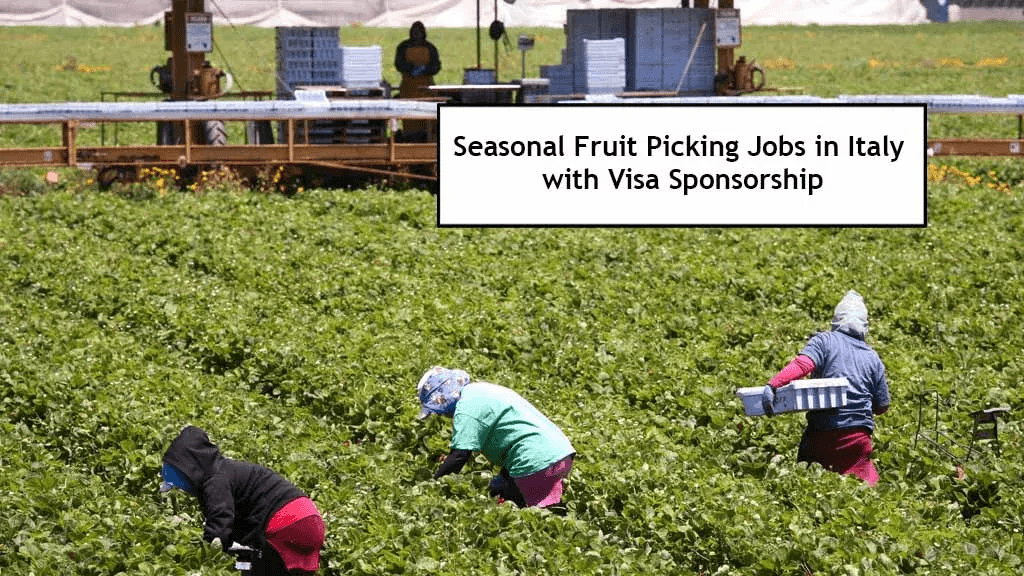
Duration: Seasonal work visas are usually issued for a limited period based on the employment contract and seasonal need. Many seasonal jobs last from a few months up to around nine months.
Best for: Agriculture, tourism, hotel, restaurant, and short-term employment sectors.
Important: A seasonal work visa is not the same as a permanent work visa. It is designed for temporary seasonal employment. Returning workers may get better opportunities in future seasons if they followed all legal rules during previous stays.
2. Non-Seasonal Work Visa
A non-seasonal work visa is for workers who receive a longer-term employment offer in Italy. This is also called subordinate work because the foreign worker works under an Italian employer.
Common sectors for non-seasonal work include:
- Construction
- Transport and logistics
- Warehouse work
- Manufacturing
- Food and beverage industry
- Textile and clothing industry
- Metal and mechanical industry
- Retail and wholesale trade
- Hotel and restaurant services
- Private health and care services
- Business support services
Duration: This visa may be issued according to the employment contract. The residence permit may be renewable if the worker maintains legal employment and follows Italian immigration rules.
Best for: Applicants who want a longer-term job in Italy and have a confirmed employer ready to sponsor them.
3. Family Assistance and Care Work Visa
Italy has high demand for workers in elderly care, domestic help, and family assistance. This category may be suitable for applicants who have experience in caregiving, home support, domestic work, or patient assistance.
Common care work roles may include:
- Elderly care
- Home assistance
- Domestic work
- Patient support
- Caregiving
- Family support services
Applicants should remember that trust, clean documents, work experience, and basic communication skills are very important in this category.
4. EU Blue Card for Highly Skilled Workers
The EU Blue Card is designed for highly qualified professionals who have strong education, professional qualifications, or specialized work experience. It is suitable for skilled workers such as IT professionals, engineers, doctors, researchers, and other qualified professionals.
The EU Blue Card may offer several advantages:
- It is for highly qualified employment.
- It may be available outside the normal Decreto Flussi quota system.
- It can provide a stronger route for long-term legal stay.
- It may support family reunification under proper conditions.
- It is suitable for professionals with recognized qualifications and a qualifying salary.
This route is not suitable for general labor jobs. It is mainly for highly skilled workers with strong qualifications and a proper job offer.
5. Self-Employment Visa
The self-employment visa is for people who want to work independently in Italy. This may include freelancers, business owners, entrepreneurs, corporate role holders, artists, or startup founders.
This visa is usually more difficult than a normal employment visa because the applicant must prove strong financial capacity, professional eligibility, business purpose, and compliance with Italian rules.
Best for: Entrepreneurs, professionals, investors, artists, and startup founders who can meet strict requirements.
See also: USA DIVERSITY VISA Application Form: Complete Step-by-Step Guide
Italy Work Permit Visa Process 2026-2027: Step-by-Step Guide
The Italy work permit process is not a one-step application. It involves the employer in Italy, Italian immigration authorities, the Embassy or Consulate, the visa application center, and finally the residence permit process after arrival.
Step 1: Find a Genuine Employer in Italy
The first and most important step is to find a real employer in Italy. The employer must be willing to hire a foreign worker and complete the official sponsorship process.
You can search for jobs through:
- Indeed Italy
- EURES job portal
- Italian recruitment agencies
- Company career pages
- Agriculture and hospitality recruitment networks
- Trusted legal or visa consultation channels
Be careful of fake job offers. A real employer should have a registered company, proper contact details, tax information, and the ability to provide a real employment contract.
Step 2: Employer Prepares Work Documents
After choosing the worker, the employer must prepare the required employment documents. These documents may include company registration papers, tax details, financial capacity, proposed employment contract, salary information, job role, and accommodation-related information.
For some non-seasonal work categories, the employer may also need to check whether a suitable worker is already available in Italy before hiring a foreign worker from outside Italy.
Step 3: Employer Applies for Nulla Osta
After preparing the documents, the employer applies for the Nulla Osta through the Italian immigration system. The application is submitted to the competent immigration office in Italy, known as Sportello Unico per l’Immigrazione or SUI.
The employer may need to provide:
- Company registration documents
- Employer identification details
- Employment contract information
- Worker’s passport details
- Salary and working conditions
- Accommodation information
- Financial capacity of the business
- Any required declaration related to local worker availability
If the application is approved within the available quota, the Nulla Osta will be issued. Without Nulla Osta, most work visa applicants cannot proceed to the Embassy visa stage.
Step 4: Applicant Applies for Italy Work Visa
After Nulla Osta approval, the applicant must apply for the Italy work visa from their country of residence. For Bangladesh applicants, the process is usually handled through the authorized VFS channel and the Italian Embassy in Dhaka instructions.
The applicant must prepare all documents carefully, complete the visa application form, submit biometrics if required, pay the applicable fees, and follow the correct submission process.
In some cases, after the visa application starts, the Italian immigration office may request the employer in Italy to confirm the job offer. If the employer does not respond properly, the visa process may be delayed or affected.
Step 5: Wait for Visa Decision
The Embassy or Consulate will examine the documents and may verify the Nulla Osta, job offer, employer details, identity, travel purpose, previous travel history, and supporting papers.
During this stage, applicants should not submit fake documents, hide previous visa refusals, or give false information. Embassies can verify documents, employment records, certificates, police clearance, and personal information.
Step 6: Travel to Italy After Visa Approval
If the visa is approved, the applicant will receive a visa sticker in the passport. The worker can then travel to Italy within the validity period of the visa.
However, receiving the visa is not the end of the process. After arriving in Italy, the worker must complete the residence permit process.
Step 7: Apply for Permesso di Soggiorno After Arrival
After entering Italy with a long-stay work visa, the foreign worker must apply for a residence permit called Permesso di Soggiorno. This is one of the most important steps after arrival.
The worker normally applies through the postal kit system at an authorized post office and later attends an appointment at the local police headquarters, known as Questura, for fingerprints and residence permit processing.
Required Documents for Italy Work Visa 2026-2027
Required documents may vary depending on visa type, applicant’s country, employer, and Embassy instructions. However, the following documents are commonly required for Italy work visa applications.
Documents Required from the Employer in Italy
- Company registration certificate
- Employer’s tax and business documents
- Valid ID document of the employer or legal representative
- Proposed employment contract
- Salary and job-condition details
- Proof that the company can pay the salary
- Accommodation declaration or housing arrangement, if required
- Application for Nulla Osta through the immigration portal
- Declaration of local worker availability check, if applicable
Documents Required from the Applicant
- Valid passport with sufficient validity and blank pages
- Completed long-stay national visa application form
- Recent passport-size photographs according to visa photo rules
- Copy or details of approved Nulla Osta
- Signed employment contract or job offer
- Proof of accommodation in Italy
- Flight reservation or travel plan, if required
- Police clearance certificate, if required
- Educational certificates or experience documents, if relevant
- Translated and apostilled/legalized documents, where required
- Visa fee payment receipt
- Any additional document requested by VFS, Embassy, Consulate, or SUI
Important: The Embassy can ask for additional documents at any time. Submitting the minimum checklist does not guarantee visa approval. All documents must be genuine, consistent, and properly prepared.
Italy Work Visa from Bangladesh: Important Notes
Bangladesh applicants should follow the instructions of the Italian Embassy in Dhaka and the authorized visa application center. Work visa applicants under Decreto Flussi generally need a valid Nulla Osta before starting the visa submission process.
Important points for Bangladesh applicants:
- Do not apply before receiving a valid Nulla Osta.
- Use only the official VFS and Embassy process for submission.
- Check the latest checklist before preparing documents.
- Public documents may require apostille or legalization through the proper authority.
- Use authorized translators where required.
- Do not trust agents who promise guaranteed jobs or guaranteed visas.
- Do not submit fake bank statements, certificates, experience letters, or police clearance.
- Keep copies of all documents, receipts, and communication with the employer.
For Bangladesh applicants, document authenticity is extremely important. Fake documents can lead to refusal, ban, legal problems, and future visa complications.
Best Job Sectors in Italy for Foreign Workers
Italy needs foreign workers in several sectors because of labor shortages, seasonal demand, and demographic changes. Some sectors may offer better opportunities for non-EU workers under the quota system.
Agriculture
Agriculture is one of the most common sectors for seasonal workers. Jobs may include harvesting fruits, vegetables, grapes, olives, greenhouse work, and farm support tasks.
Tourism and Hospitality
Italy receives a large number of tourists every year. Hotels, restaurants, resorts, and tourism companies often need seasonal and support workers, especially during busy periods.
Construction
Construction companies may hire foreign workers for building, renovation, support labor, and technical roles. Experience and physical fitness can be important in this sector.
Transport and Logistics
Transport, warehouse, logistics, and delivery-related jobs may be available for foreign workers, especially where employers face labor shortages.
Caregiving and Family Assistance
Care work is an important sector in Italy because many families need support for elderly people, patients, and domestic assistance. Trust, experience, and communication skills are very important in this field.
Italy Work Visa Processing Time
The processing time for an Italy work permit can vary. It depends on the visa category, employer preparation, quota availability, SUI processing, Embassy workload, appointment availability, and document verification.
Estimated timeline:
| Stage | Estimated Time |
| Finding employer | Varies widely |
| Employer document preparation | Several days to weeks |
| Nulla Osta processing | May take weeks or months |
| Visa appointment or submission | Depends on country and availability |
| Embassy visa processing | Usually several weeks, but can vary |
| Residence permit after arrival | Depends on local Questura processing |
In practical terms, applicants should prepare for a process that may take several months from job offer to final travel. Delays are common when documents are incomplete, the employer responds late, quotas are full, or verification takes longer than expected.
Italy Work Visa Cost in 2026-2027
The total cost of an Italy work visa may include visa fees, VFS service charges, translation costs, apostille or legalization costs, courier charges, travel insurance if required, residence permit fees, flight cost, and accommodation cost.
Common cost items include:
- Visa application fee
- VFS service fee
- Document translation fee
- Apostille or legalization fee
- Passport photo cost
- Police clearance cost
- Residence permit postal kit and administrative fees
- Tax stamp or stamp duty where applicable
- Travel and accommodation expenses
Fees can change at any time. Applicants should always check the latest fee schedule from the Italian Embassy, Consulate, or authorized visa application center before submission.
Can You Apply for Italy Work Visa Without a Job Offer?
For most Italy work visa categories, you cannot apply without a valid job offer from an Italian employer. The employer must start the process by applying for Nulla Osta. If there is no employer, there is usually no work authorization.
Some self-employment and highly skilled routes may follow different requirements, but even those categories require strong proof of professional purpose, financial ability, qualifications, or business activity.
So, if someone says you can get an Italy work visa without an employer, without a contract, or without official authorization, you should be very careful.
Can a Tourist Visa Be Converted into a Work Visa in Italy?
A standard tourist visa is not a proper route for working in Italy. A tourist visa is for short visits, tourism, family visits, or similar temporary purposes. It does not allow you to work legally.
If you want to work in Italy, you should follow the correct work visa route from outside Italy unless a specific legal conversion route applies under Italian law. Do not travel on a tourist visa with the hidden intention of working illegally.
Working illegally can create serious problems, including deportation, future visa refusal, employer penalties, and loss of legal status.
Do You Need to Speak Italian?
Italian language is not always a strict visa requirement for every work visa category. However, knowing basic Italian can greatly improve your job search, daily life, workplace communication, and long-term settlement in Italy.
For agriculture or some support jobs, basic Italian may be enough at the beginning. For hospitality, care work, customer service, healthcare, and skilled jobs, better Italian language ability can be very helpful or even required by the employer.
Before moving to Italy, applicants should learn basic Italian phrases related to work, safety, documents, transport, housing, and emergency situations.
Can You Bring Your Family to Italy?
In some cases, foreign workers legally living in Italy may apply for family reunification. This usually depends on the type of residence permit, income level, accommodation, duration of stay, and legal conditions.
Family reunification is not automatic. The worker must normally prove that they have enough income and suitable housing to support family members. Rules may vary depending on the applicant’s status and Italian immigration requirements.
What Happens If You Lose Your Job in Italy?
If a foreign worker loses their job in Italy, they should not panic or disappear. The worker should follow Italian legal procedures, register with the appropriate employment office if eligible, and look for a new job within the permitted time and conditions of the residence permit.
It is important to keep legal status valid, renew documents on time, and avoid illegal work. If your residence permit is expiring, you should seek proper legal advice before the deadline.
Common Reasons for Italy Work Visa Refusal
Many applicants lose their chance because of simple but serious mistakes. Some common refusal reasons include:
- Fake job offer
- Fake employer or unverified company
- Invalid or expired Nulla Osta
- Incomplete visa application form
- Mismatch between passport details and Nulla Osta information
- Wrong visa category
- Missing translation or apostille/legalization
- Fake educational or experience certificate
- Police clearance problem
- Employer fails to confirm job offer when requested
- Accommodation documents are not acceptable
- Applicant gives inconsistent answers
- Previous immigration violation or visa fraud
To reduce refusal risk, applicants should prepare documents carefully, use correct information, and avoid shortcuts.
How to Avoid Italy Work Visa Scams
Because Italy work visas are in high demand, many fake agents and scammers target applicants. They may offer fake jobs, fake Nulla Osta, fake appointment letters, or guaranteed visa packages.
Protect yourself by following these safety tips:
- Never pay money for a job without verifying the employer.
- Check the company name, address, tax information, and contact details.
- Ask for a written job contract.
- Do not submit fake documents.
- Do not believe anyone promising 100% visa guarantee.
- Do not hand over your passport to unauthorized people.
- Use official Embassy and VFS instructions.
- Keep copies of all documents and payment receipts.
- Verify the Nulla Osta and application process properly.
A genuine visa process may take time. If someone promises a very fast guaranteed work visa without employer verification, it is a warning sign.
Frequently Asked Questions About Italy Work Permit Visa 2026-2027
1. Is Italy work permit open for foreign workers?
Italy allows foreign workers through the Decreto Flussi quota system and other eligible routes. Applicants need a genuine employer, proper documents, and approval from the relevant Italian authorities.
2. What is the Italy work permit quota for 2027?
For 2027, Italy has planned a quota of 165,850 foreign workers under the multi-year Decreto Flussi plan.
3. Can Bangladeshis apply for Italy work visa?
Yes, Bangladeshi applicants may apply if they have a valid employer, approved Nulla Osta, and complete documents according to Embassy and VFS instructions.
4. What is Nulla Osta?
Nulla Osta is the official work authorization issued in Italy before the visa application. It is normally applied for by the employer through the Italian immigration system.
5. Can I apply for Italy work visa without an employer?
For most work visa categories, no. You need a genuine Italian employer and job offer. Self-employment and highly skilled categories may have different rules.
6. How long does the Italy work visa process take?
The full process may take several months, depending on job offer, quota availability, Nulla Osta processing, appointment availability, Embassy verification, and residence permit steps.
7. Is an Italy work visa guaranteed after Nulla Osta?
No. Nulla Osta is very important, but the Embassy or Consulate still examines the visa application. Visa approval is not guaranteed.
8. Can seasonal workers stay permanently in Italy?
A seasonal visa is temporary. Some workers may return in later seasons or qualify for other routes if legal conditions are met, but seasonal work itself is not automatically permanent residence.
9. Do I need a police clearance certificate?
It may be required depending on visa category and Embassy checklist. Applicants should check the latest official checklist before submission.
10. Can I work in another Schengen country with an Italy work visa?
An Italy work visa allows you to work legally in Italy under the conditions of your permit. It does not automatically give you the right to work in other Schengen countries.
Final Checklist Before Applying
- Confirm that your employer is genuine.
- Check that your job category is eligible.
- Make sure the employer applies for Nulla Osta correctly.
- Verify that all personal details match your passport.
- Prepare translations and apostille/legalization where needed.
- Check the latest Embassy and VFS checklist.
- Do not use fake documents.
- Keep copies of all submissions and receipts.
- Apply for residence permit after entering Italy.
- Follow all legal rules during your stay in Italy.
Conclusion
Getting an Italy Work Permit Visa in 2026-2027 is possible, but it requires careful planning, a genuine employer, correct documents, and proper understanding of the Decreto Flussi quota system.
The 2027 Italy work permit quota gives foreign workers a new opportunity to prepare early. If you want to work legally in Italy, your first goal should be finding a real employer who can apply for Nulla Osta on your behalf.
Applicants from Bangladesh and other non-EU countries should always follow official Embassy and VFS instructions, avoid fake agents, prepare documents honestly, and complete the residence permit process after arriving in Italy.
If you need help understanding your Italy work visa options, document preparation, appointment process, or application checklist, you may contact a trusted visa consultant for professional guidance. Always remember: a legal and transparent process is the safest way to build your future in Italy.