
Are you an ambitious professional in Bangladesh looking for a tax-free income, a high standard of living, and a thriving career in the Middle East? Kuwait, with its incredibly strong currency and booming economy, has long been a top destination for Bangladeshi expatriates.
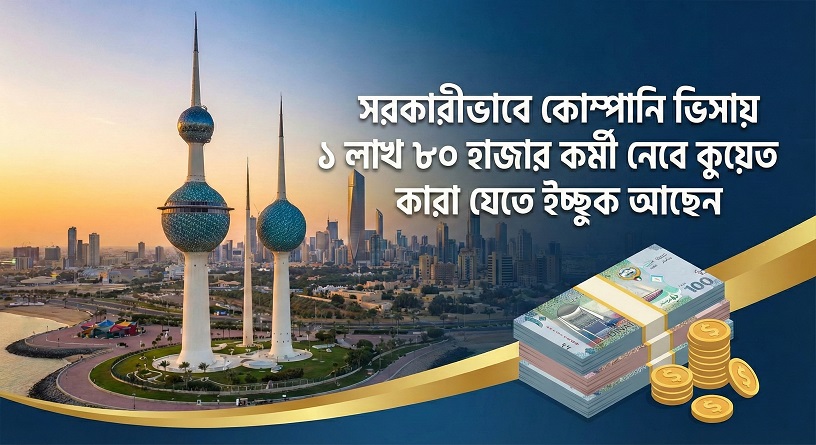
For 2026, the opportunities are expanding. Following high-level diplomatic meetings, Kuwait is actively moving to recruit new skilled workers from Bangladesh, with a strong focus on sectors like information technology (IT), education, engineering, and military cooperation.
However, navigating the Kuwaiti immigration and sponsorship system (known as Kafala) requires strict adherence to legal procedures, medical clearances, and document authentications. A single mistake in your paperwork can lead to immediate visa rejection.
In this ultimate, step-by-step guide tailored specifically for Bangladeshi citizens, we will break down the latest 2026 Kuwait Work Permit Visa (Article 18) rules, the exact application process, and everything you need to know before you fly.
Why Choose Kuwait? (Interesting Facts to Know!)
Before we dive into the complexities of NOCs and medical tests, let’s look at some fascinating facts that make Kuwait an incredibly highly desired destination for Bangladeshi workers:
- The Highest Valued Currency in the World: The Kuwaiti Dinar (KWD) consistently ranks as the strongest currency globally. Earning in Dinars and sending remittances back to Bangladesh provides massive financial benefits for your family.
- 100% Tax-Free Income: Unlike European countries where you might lose 30-40% of your salary to taxes, Kuwait offers a completely tax-free personal income system. You take home exactly what you earn.
- Highly Subsidized Cost of Living: The Kuwaiti government heavily subsidizes basic necessities. Petrol, electricity, and water are extremely cheap, which helps you save a large portion of your monthly salary.
- A Massive Bangladeshi Community: Kuwait is home to hundreds of thousands of Bangladeshi expatriates. You will easily find Bangladeshi supermarkets, restaurants, and a strong community support system, making you feel right at home.
- Free Public Healthcare: Once you are a legal resident with a Civil ID and have paid your mandatory annual health insurance fee, you gain access to Kuwait’s excellent public healthcare system.
Understanding the Kuwait Visa System for Bangladeshis
The Kuwaiti immigration system operates on a strict sponsorship model. You cannot simply apply for a work visa independently or travel to Kuwait to “look for a job”. Your legal status is directly tied to a Kuwaiti employer.
Here are the primary visa categories you need to know:
1. The Article 18 Visa (Private Sector Employment)
This is the standard, most important work permit for Bangladeshi professionals, skilled workers, and laborers employed by private companies in Kuwait.
- Requirement: You must have a valid Kuwaiti employer properly registered with the Public Authority for Manpower (PAM) to act as your sponsor. Contractors or freelancers cannot apply under this visa.
2. The Article 20 Visa (Domestic Workers)
This visa is specifically for domestic aides, drivers, and household workers. The rules, minimum wages, and application processes for Article 20 are entirely different from the standard corporate Article 18 visa.
3. The Article 22 Visa (Family/Dependent Visa)
Once you are legally established in Kuwait on an Article 18 visa and meet the minimum salary requirements, you can sponsor your spouse and children to join you under this dependent visa category.
Major 2026 Updates: What Bangladeshi Applicants Must Know
If you are applying for a Kuwait Work Permit in 2026, you must be aware of these strict enforcement updates to avoid deportation or visa rejection:
1. Focus on Highly Skilled Migration
Recent diplomatic talks confirm that Kuwait and Bangladesh will soon sign agreements to boost the recruitment of new skilled workers. The era of unstructured labor migration is shifting, and priority is now being given to professionals with verified educational and technical qualifications.
2. Strict Police Clearance Authentication
To enhance national security, the Kuwaiti government has enforced a strict rule: any passenger traveling to Kuwait with a work permit for the very first time must hold an original Police Clearance Certificate (PCC). Most importantly, this PCC must be officially authenticated by the Kuwait Embassy in Bangladesh. Without this embassy stamp, you will not be allowed to enter the country.
3. The 6-Month Residency Cancellation Rule
If you secure a work visa, you must be careful about leaving the country for long periods. The Residency Affairs sector has begun strictly canceling the Article 18 residency of expatriate workers who remain outside of Kuwait for a continuous period of 6 months or more.
The Step-by-Step Application Process from Bangladesh
The Kuwait work visa process is completely employer-driven. This means your future boss in Kuwait does most of the legal work before you even step foot in the embassy in Dhaka. Here is the exact roadmap:
Step 1: Secure a Genuine Job Offer
You must first secure a job with a valid Kuwaiti sponsoring entity. The employer must hold an active commercial license and be in good standing with Kuwaiti labor and tax authorities.
Step 2: The Employer Applies for the Work Permit (in Kuwait)
Your employer gathers your documents (passport copy, qualifications) and submits a work permit application to the Public Authority for Manpower (PAM) in Kuwait. Once PAM approves, the employer secures an entry visa from the Ministry of Interior.
Step 3: Document Attestation at the Bangladesh Embassy (in Kuwait)
To safeguard Bangladeshi workers, the ‘Single Visa’ (Visa-18) must be attested by the Bangladesh Embassy in Kuwait. Your sponsor (Kofil) must appear at the embassy in person (or send a representative with a ‘Power of Attorney’ / Towkil Khas). They must present their original Civil ID, a photocopy of their passport signature page, and the Employer Signature Approval Certificate (Itemat Toukiya) provided by PAM. The fee for this attestation is 3.000 Kuwaiti Dinars.
Step 4: Receive the Visa in Bangladesh
Once the visa is approved and attested, your employer will courier the original No Objection Certificate (NOC) / Entry Visa paper to you in Bangladesh.
Step 5: Obtain and Authenticate Your Police Clearance
You must apply for a Police Clearance Certificate (PCC) from the Bangladesh Police. Once issued, you must take this certificate to the Ministry of Foreign Affairs (MOFA) in Dhaka for attestation, and finally, submit it to the Kuwait Embassy in Bangladesh for final authentication.
Step 6: Pass the GAMCA Medical Examination
Kuwait has extremely strict health requirements. You must undergo a comprehensive medical examination at an approved Wafid (formerly GAMCA) medical center in Bangladesh. You will be tested for contagious diseases, including HIV/AIDS, Hepatitis, and Tuberculosis. You can only proceed if you are declared “Medically Fit”.
Step 7: Visa Stamping at the Embassy in Dhaka
Once you have your authenticated PCC and your GAMCA Medical Fit certificate, you must submit your original passport, the NOC/Entry Visa, and your photographs to the Kuwait Embassy in Dhaka (or their designated visa processing agency). The embassy will officially stamp the Article 18 visa into your passport.
Step 8: Travel, Biometrics, and Civil ID
After arriving in Kuwait, the process is not quite over. You must complete mandatory local medical screenings and biometric fingerprinting. Finally, your employer will finalize your residence permit (Iqama) with the Ministry of Interior, and you will apply for your Kuwait Civil ID within 30 days of receiving your residency visa. Only then are you fully legally settled!
Recommended: Portugal Work Permit Visa.
Complete Document Checklist for Bangladeshi Applicants
To ensure your visa is stamped without delays, you must prepare the following documents meticulously:
- Valid Passport: Your Bangladeshi passport must be valid for a minimum of 6 to 12 months from your planned date of arrival in Kuwait. It must have at least two blank pages.
- Official Entry Visa (NOC): The original visa document provided by your Kuwaiti sponsor.
- Authenticated Police Clearance Certificate (PCC): Verified by MOFA and stamped by the Kuwait Embassy in Bangladesh.
- GAMCA Medical Certificate: A valid health certificate from a local approved doctor showing you are in good health and free from contagious diseases.
- Photographs: Recent passport-size color photographs with a clear white background.
- Educational Certificates: If you are applying for a skilled position, your university degrees or technical diplomas must be attested by MOFA and the Kuwait Embassy.
Visa Processing Times and Costs
- Processing Time: The initial approval from the Public Authority for Manpower (PAM) in Kuwait usually takes between 2 to 4 weeks. Once you receive the NOC in Bangladesh, completing the GAMCA medical, PCC authentication, and final embassy stamping usually takes an additional 2 to 3 weeks.
- Who Pays What? Legally, the Kuwaiti employer is responsible for paying the work permit fees, health insurance, and Iqama issuance fees inside Kuwait. The applicant in Bangladesh typically pays for their own GAMCA medical test, Police Clearance, MOFA attestation fees, and the flight ticket.
How to Avoid Fake Visa Scams in Bangladesh
Unfortunately, visa scams are common. To protect yourself:
- Never pay for an “Open Visa”: There is no such thing as an open visa in Kuwait. Your visa is tied to a specific employer. If an agent says you can go to Kuwait and find any job you want, it is a scam.
- Verify the Visa: You can verify the authenticity of your Kuwaiti entry visa directly on the official State of Kuwait Ministry of Interior website using the visa reference number.
- Check the Salary: Ensure the salary promised by the agent in Bangladesh matches the exact salary written in the official employment contract submitted to PAM.
Conclusion:
Kuwait offers an unparalleled opportunity for Bangladeshi citizens to rapidly elevate their financial status and career in 2026. With the upcoming bilateral agreements focusing on skilled migration, there has never been a better time for IT professionals, engineers, and technicians to look toward Kuwait.